
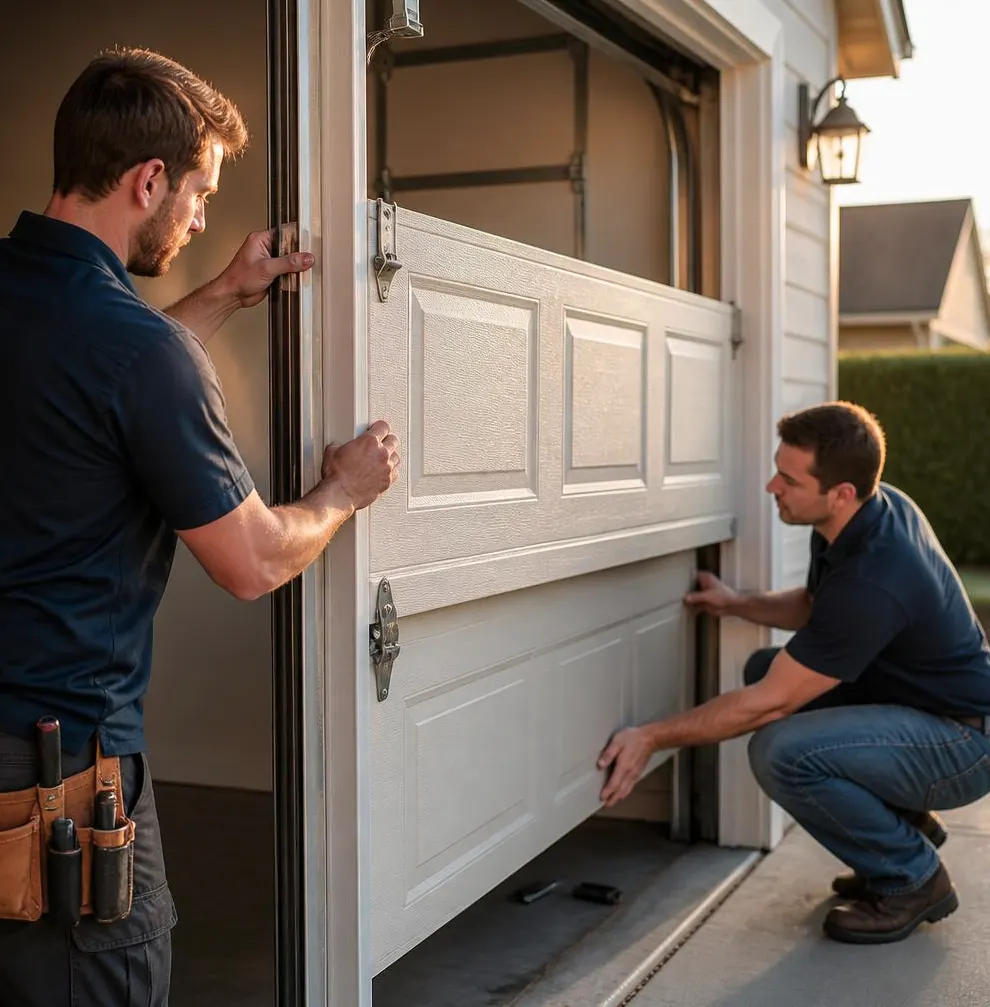
The Argument Started in the Garage
It usually goes something like this: one spouse is standing in the detached garage or shop building looking at the door, and says something like, "We should just put in one of those warehouse doors, they're basically the same thing as our house door, just bigger." The other spouse isn't so sure. If that conversation sounds familiar, here's what actually separates a commercial or warehouse overhead door from a standard residential garage door, and why it matters for upkeep.
They're Not Just Scaled-Up Versions of Each Other
A residential garage door is built to open and close a handful of times a day, hold back weather, and look decent doing it. A commercial or warehouse door is built around a completely different job: high cycle counts, heavier loads, and often tougher environmental exposure.
- Steel gauge and panel construction. Commercial doors typically use thicker, heavier-gauge steel sections than residential doors, sometimes with reinforced ribbing to handle more abuse and wider spans.
- Springs rated for far more cycles. Residential torsion springs are usually rated for somewhere around 10,000 cycles. Commercial-grade springs are built for much higher cycle counts because a warehouse or shop door might open and close dozens of times a day instead of two or three.
- Bigger, more powerful openers. A residential opener is sized for a lightweight door moving a few times daily. Commercial applications often use chain-hoist or jackshaft operators with higher horsepower and continuous-duty motors built to run repeatedly without overheating.
- Different track and hardware setups. Commercial doors often use heavier tracks, larger rollers, and sometimes different mounting configurations to support the added weight and frequency of use.
- Added safety features. High-traffic commercial doors frequently include extra safety edges, photo-eye sensors, and sometimes wind-load bracing that residential doors don't need.
So the "it's basically the same, just bigger" argument doesn't really hold up. It's a different category of equipment built for a different job.
Maintenance Needs Are Different Too
Because commercial doors cycle so much more often, they need more frequent attention, not less.
- More frequent lubrication. Rollers, hinges, and torsion springs on a high-cycle door dry out and wear faster. A door opening 20-30 times a day needs lubrication on a tighter schedule than a home garage door.
- Spring tension checks. Commercial springs under constant use lose tension sooner than their rated lifespan might suggest if they're not inspected regularly. A sagging door or one that feels heavier than usual is an early warning sign.
- Track and roller wear inspection. Heavier use means more wear on tracks and rollers. Left unchecked, this leads to the door binding, jumping track, or running unevenly.
- Weatherseal and bottom seal replacement. Commercial buildings often have wider door openings, which means more surface area for drafts, moisture, and debris to get in if seals degrade.
- Opener maintenance. Chain-hoist and jackshaft operators have their own wear points, chain tension, and gear maintenance that a standard residential opener doesn't require.
How Local Weather Factors In
Cold winters here bring ice and road salt, which can work its way into tracks and hardware on any overhead door, residential or commercial. High-cycle commercial doors are more exposed to this because they're opening and closing more often, giving ice, grit, and salt more chances to get into moving parts. As winter sets in, it's worth having tracks and rollers checked before the hard freezes hit.
Spring storm and tornado season is another factor, especially for warehouse and commercial doors with wide openings. Wind load rating matters more on a large commercial door than on a typical residential one, and it's worth confirming a commercial door is rated appropriately for the building's exposure, particularly for shops, storage buildings, or any structure with a wide, unsupported opening.
When to Call Hopkinsville Door & Opener
If you're weighing a commercial-style door for a shop or detached garage, or you already have one that's starting to sag, squeal, or run unevenly, that's a good time to call. Hopkinsville Door & Opener handles both Commercial Garage Door Service and Spring Replacement for high-cycle doors, and can walk you through what's actually appropriate for your building versus a standard residential setup, rather than guessing based on what looks similar at a glance.
If you're in Hopkinsville, Fort Campbell, Oak Grove, Pembroke, Elkton, Cadiz, Clarksville, or Trenton and need an honest read on a commercial or residential overhead door, give Hopkinsville Door & Opener a call.